Choosing a material
| Material | What it is like | Typical price band |
|---|---|---|
| Concrete slabs | Cheapest, wide range of colours, can fade | Lower |
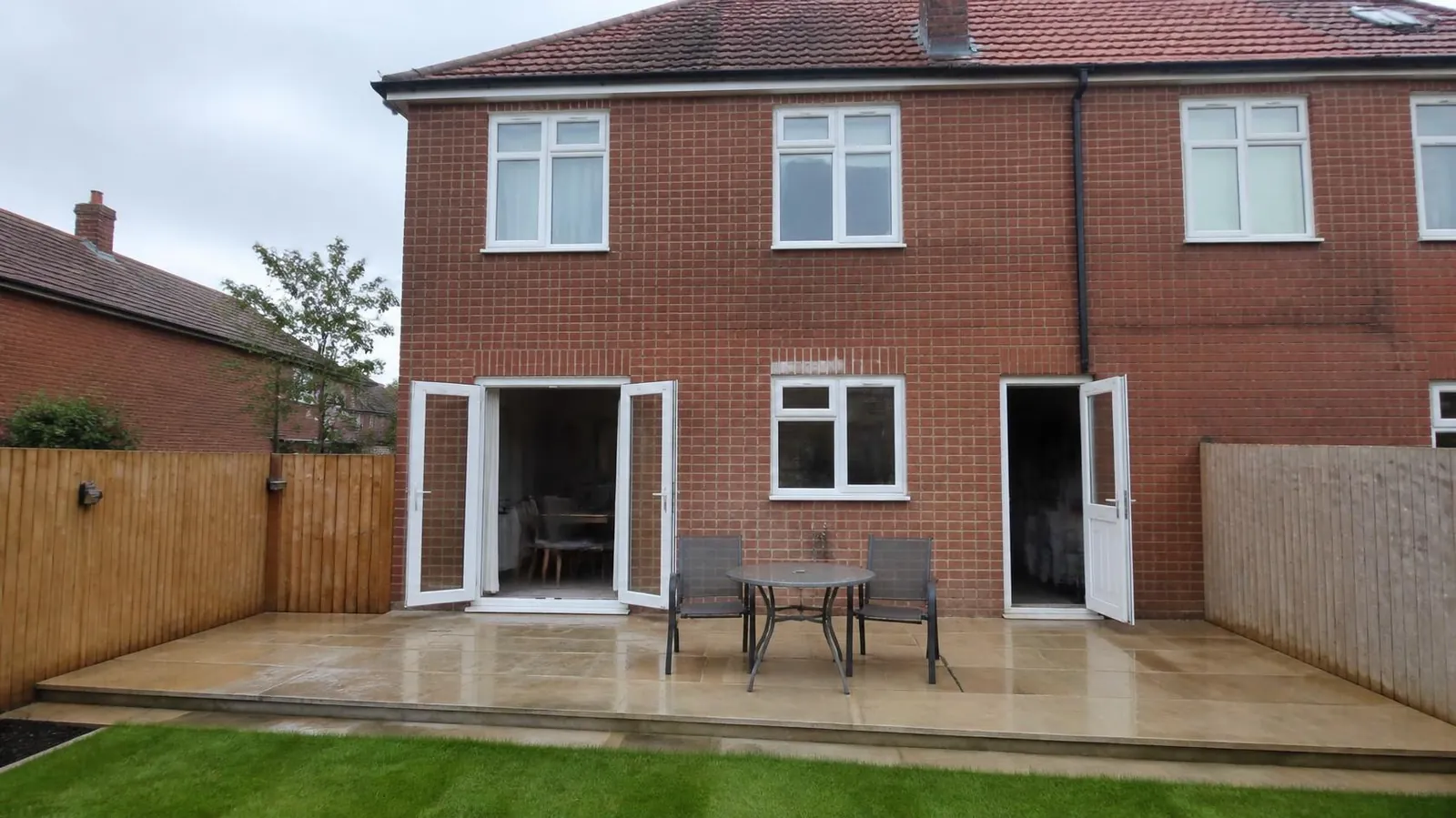
| Indian sandstone | Natural riven texture, warm buff and grey tones, needs sealing to resist staining | Middle |
| Porcelain | Very hard, stain-resistant, low maintenance, needs specialist bedding and cutting | Middle to upper |
| Granite and slate | Dense and durable, smart contemporary look | Upper |
| Clay pavers or setts | Traditional, suit Victorian and Edwardian houses | Middle to upper |
Checkatrade's patio cost guide puts laying costs at roughly £65 to £340 per m², with the material choice making most of the difference (Checkatrade patio cost guide). A 20m² sandstone patio typically lands in the low thousands once excavation, base and pointing are included.
What goes under a patio
On the heavy clay common across Stockton, the base matters even more than usual:
- Dig out to allow for around 100 to 150mm of sub-base plus the bed and slab.
- Sub-base of crushed stone, compacted in layers.
- Full mortar bed under every slab. "Five-spot" bedding, with a dab of mortar at each corner and the middle, leaves voids that let slabs rock and crack.
- Priming porcelain slabs with a slurry primer so the mortar actually bonds to them.
- Jointing with a proper compound or mortar, not just brushed-in sand.
Falls and drainage
A patio should fall gently away from the house, typically about 1 in 60 to 1 in 80, so water runs off rather than pooling against the wall. The finished surface should sit at least 150mm below the damp-proof course. Where a patio meets the house and cannot fall away, a channel drain along the edge is the usual answer.
Because clay drains slowly, water that runs off a patio needs somewhere to go: a planted border, a lawn or a soakaway sized for clay. Patios in back gardens are not covered by the front-garden drainage rule that applies to driveways, but good drainage protects both the patio and the house.
Patios with a new drive
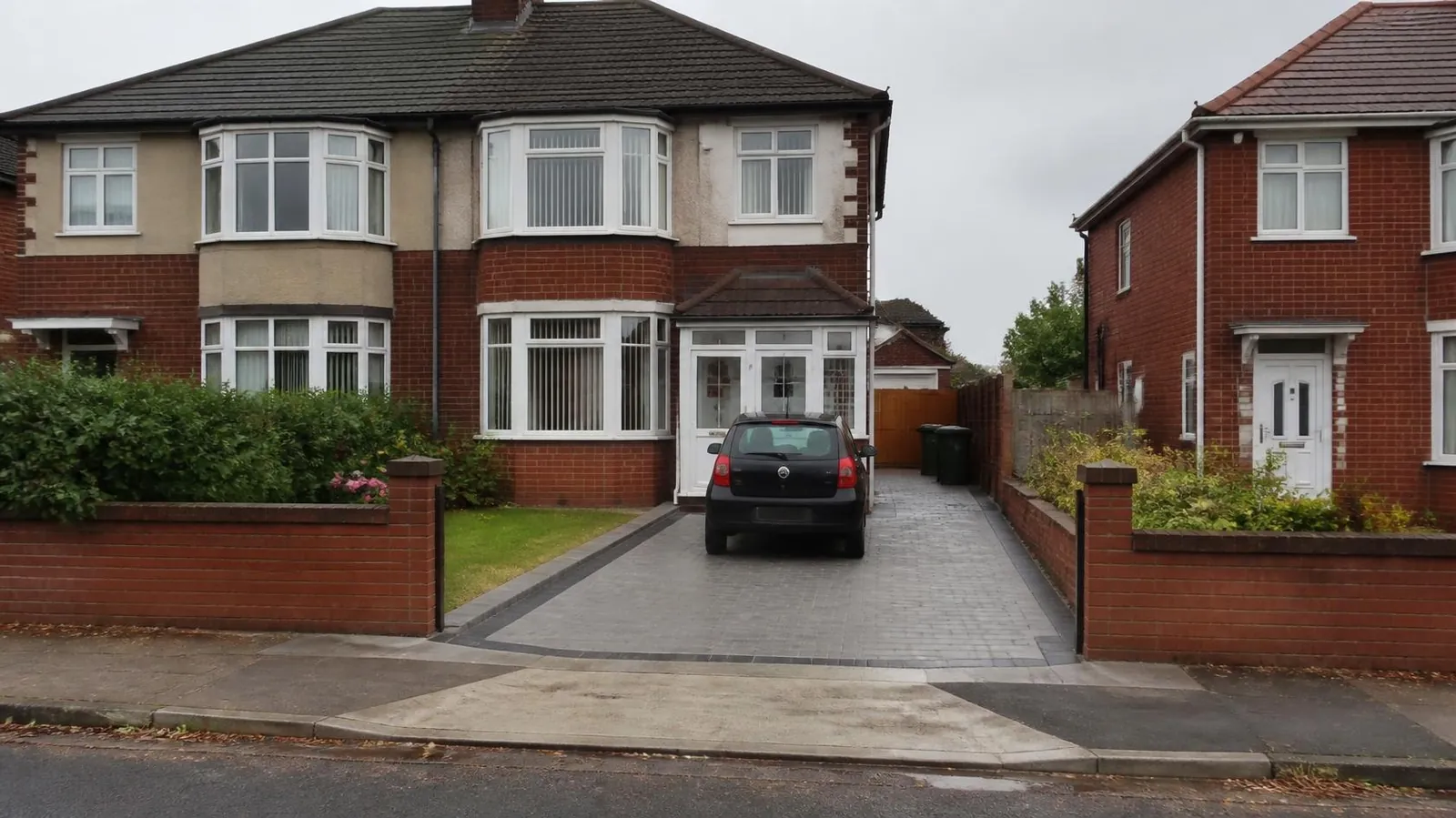
Many Stockton homeowners do the front and back at the same time. Matching a block-paved drive with a patio in the same family of colours, or using the same sandstone for a front path and a back terrace, makes a house look joined up. Combining jobs can also save on skip hire, delivery and setting-up costs.
Questions to ask an installer
- Will every slab be laid on a full mortar bed?
- What depth of sub-base are you allowing for?
- Which way will the patio fall, and where will the water go?
- For porcelain: will you use a primer, and do you have a wet saw for clean cuts?
- What jointing compound will you use, and is it suited to the gaps?
Common questions
How much does a patio cost in Stockton?
Roughly £65 to £340 per m² on UK averages, depending mainly on the material. Most mid-range sandstone or porcelain patios sit in the middle of that band.
Is porcelain better than sandstone?
Porcelain is harder, more stain-resistant and needs less maintenance. Sandstone has a more natural, varied look and is often cheaper. Both last well if properly laid.
Do I need planning permission for a patio?
Usually not for a ground-level patio in a back garden. Raised decks and terraces, and work in a conservation area with an Article 4 Direction, can be different. See our conservation areas guide.
Why do patio slabs rock?
Usually because they were bedded on spots of mortar rather than a full bed, or the sub-base was too thin and has settled.
How long does a patio take to lay?
A typical 20 to 30m² patio takes a few days, depending on access and how much digging is needed.
Can a patio be laid over an old one?
Sometimes, if the old patio is sound and levels allow, but it usually raises the surface too close to the damp-proof course. Lifting it is often better.