Why block paving suits Stockton homes
Block paving is flexible in the useful sense. Individual blocks can be lifted and re-laid if a utility company needs to dig, if a patch sinks, or if you want to widen the drive later. That makes it a practical choice on estates where many owners start with a single drive and widen it when a second car arrives.
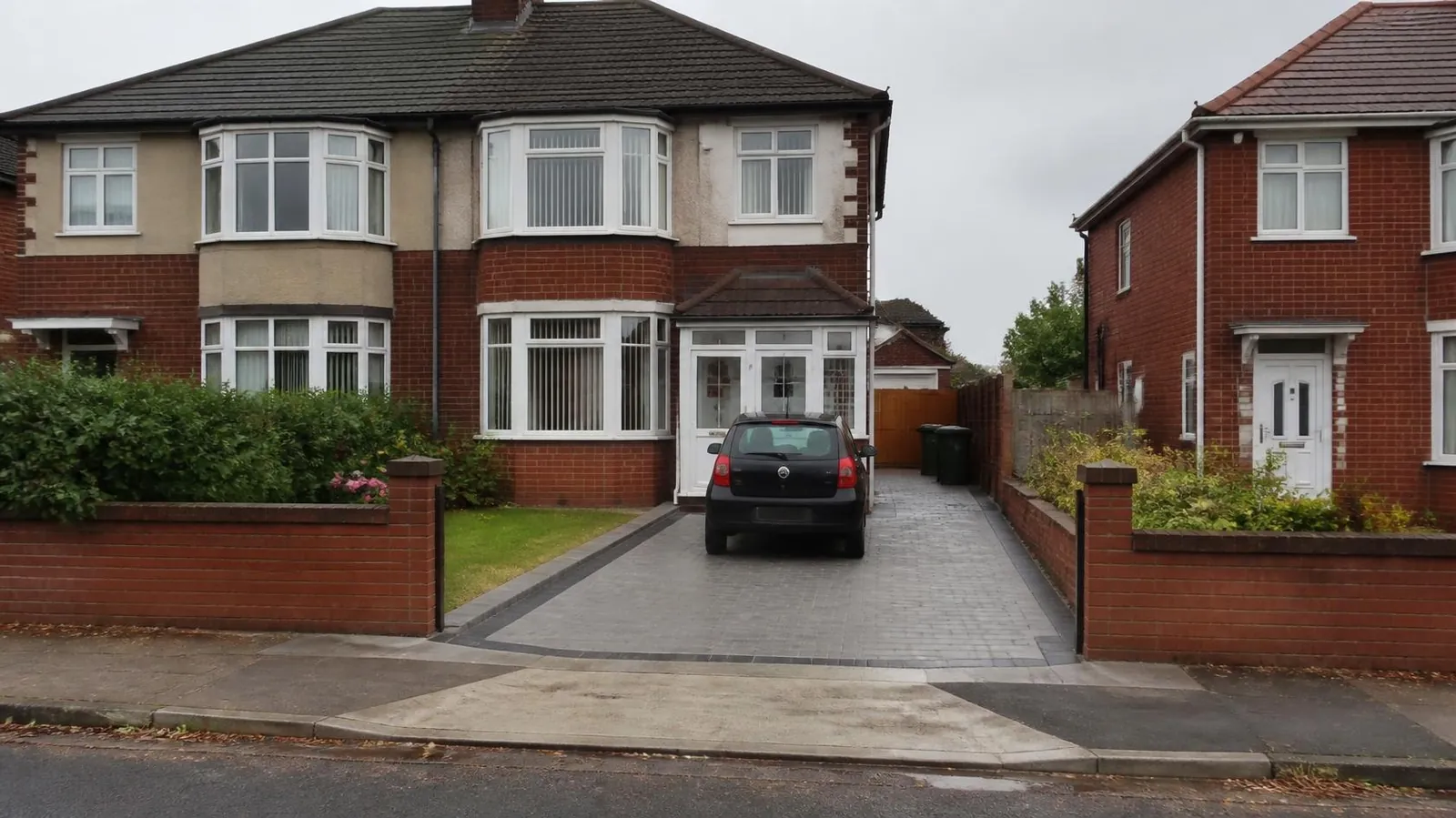
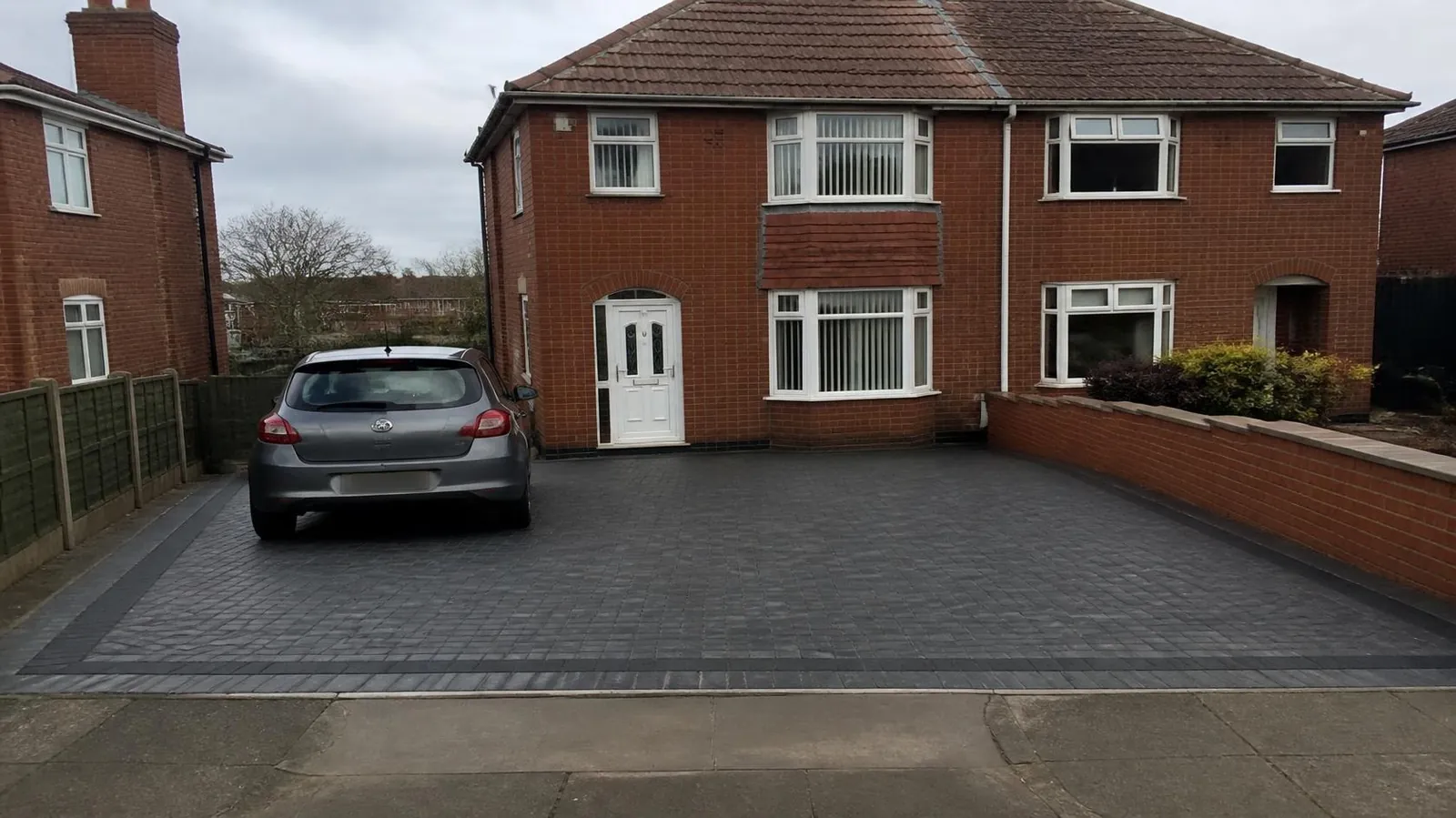
It also comes in a wide range of colours and patterns. Charcoal or brindle blocks with a contrasting border are common on the 1990s and 2000s estates on the west side of Stockton, while warmer red and buff blends sit better against the older brick of Norton and Oxbridge.
How a block drive should be built
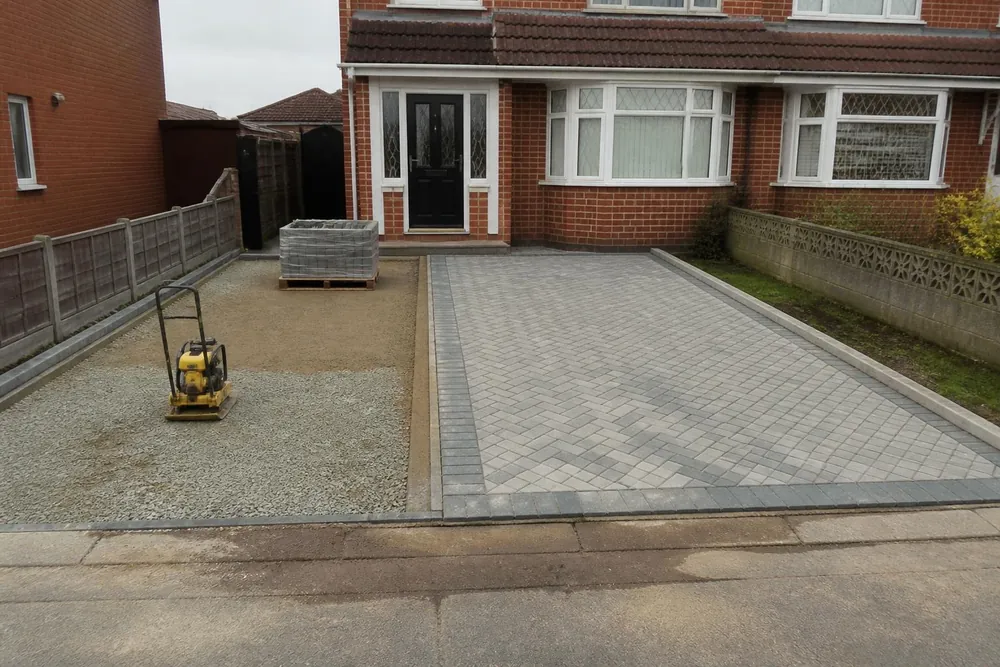
The surface you see is only the top 50 to 80mm. What makes it last is underneath:
- Dig out to the right depth. Typically 150 to 250mm below the finished level for a car drive, more on soft ground.
- Geotextile membrane where the ground is soft clay, to stop the sub-base mixing into it.
- Compacted sub-base of crushed stone, laid and compacted in layers.
- Edge restraints set in concrete. Without them the blocks creep outwards and joints open.
- Sand bed, screeded level, then the blocks laid in herringbone (the strongest pattern for cars).
- Compact and kiln-dried sand brushed into the joints.
The most common faults on older Stockton drives, such as dips where the car wheels sit, blocks rocking at the edge and weeds in open joints, come back to a thin sub-base or missing edging. When you compare quotes, ask for the sub-base depth in writing.
Cost in Stockton
Checkatrade's April 2026 average for block paving is about £100 per m², supplied and laid. MyBuilder's August 2026 guide covers a range of about £50 to £130 per m² across surfaces, with block paving in the middle.
| Drive | Typical cost at £100/m² |
|---|---|
| 20m² single | about £2,000 |
| 40m² double | about £4,000 |
| 60m² large drive | about £6,000 |
Source: Checkatrade driveway cost guide, April 2026.
Premium blocks, tumbled or natural stone setts, a lot of cutting around curves, and breaking out an old concrete drive all push the price up. Our cost guide lists the usual extras.
Re-laying a drive that has sunk
If your block drive has dipped in places but the blocks themselves are fine, it can often be lifted, the base made good and the same blocks re-laid. That is usually much cheaper than a new drive. It is worth asking for if you have one of the earlier block drives on estates such as Elm Tree or Bishopsgarth that has settled over the years.
If the whole drive is rocking and the base has failed throughout, a rebuild is the honest answer.
Permeable block paving
Standard blocks on a sand bed are not classed as permeable, because the joints silt up and most water runs off. Permeable block paving uses blocks with wider joints filled with fine grit, laid on an open-graded stone base, so rain passes through and soaks away or drains to an outlet. It is how many people meet the front-garden rule without needing planning permission. On heavy clay, a permeable drive may need a perforated pipe to carry water away, because the clay itself will not take it quickly. Our guide to permeable driveways covers this.
Comparing block paving with resin? The resin driveways page sets out what resin needs underneath and where it is the better choice.
Common questions
How long does block paving last?
A well-built block drive can last 20 years or more. The blocks rarely wear out; failures almost always come from the base or edging.
Can block paving be laid over concrete?
Sometimes, if the concrete is sound and the levels allow it against the house damp course. Often the old drive is broken out so the finished level stays at least 150mm below the damp-proof course.
How do I stop weeds in the joints?
Keep the joints full of kiln-dried sand, sweep regularly and re-sand after pressure washing. Some owners have the joints sealed.
Do I need planning permission for block paving?
Not if you use permeable blocks or the water drains into your garden. Standard blocks over 5m² draining onto the road need permission.
Can I widen my block drive later?
Yes. Matching blocks can be added, though new blocks look brighter at first until they weather.
What pattern is strongest?
Herringbone at 45 or 90 degrees spreads the load of turning wheels best, which is why it is used on most drives.