Surface fault or base failure?
The surface of a drive is only the top few centimetres. Underneath is a compacted stone sub-base that carries the weight of the car. Most repair decisions come down to which of the two has gone wrong.
| What you see | What it usually means |
|---|---|
| One sunken patch, often in a wheel track or by a manhole | A local soft spot; usually repairable |
| Weeds and moss in block joints | Joint sand washed out; repairable |
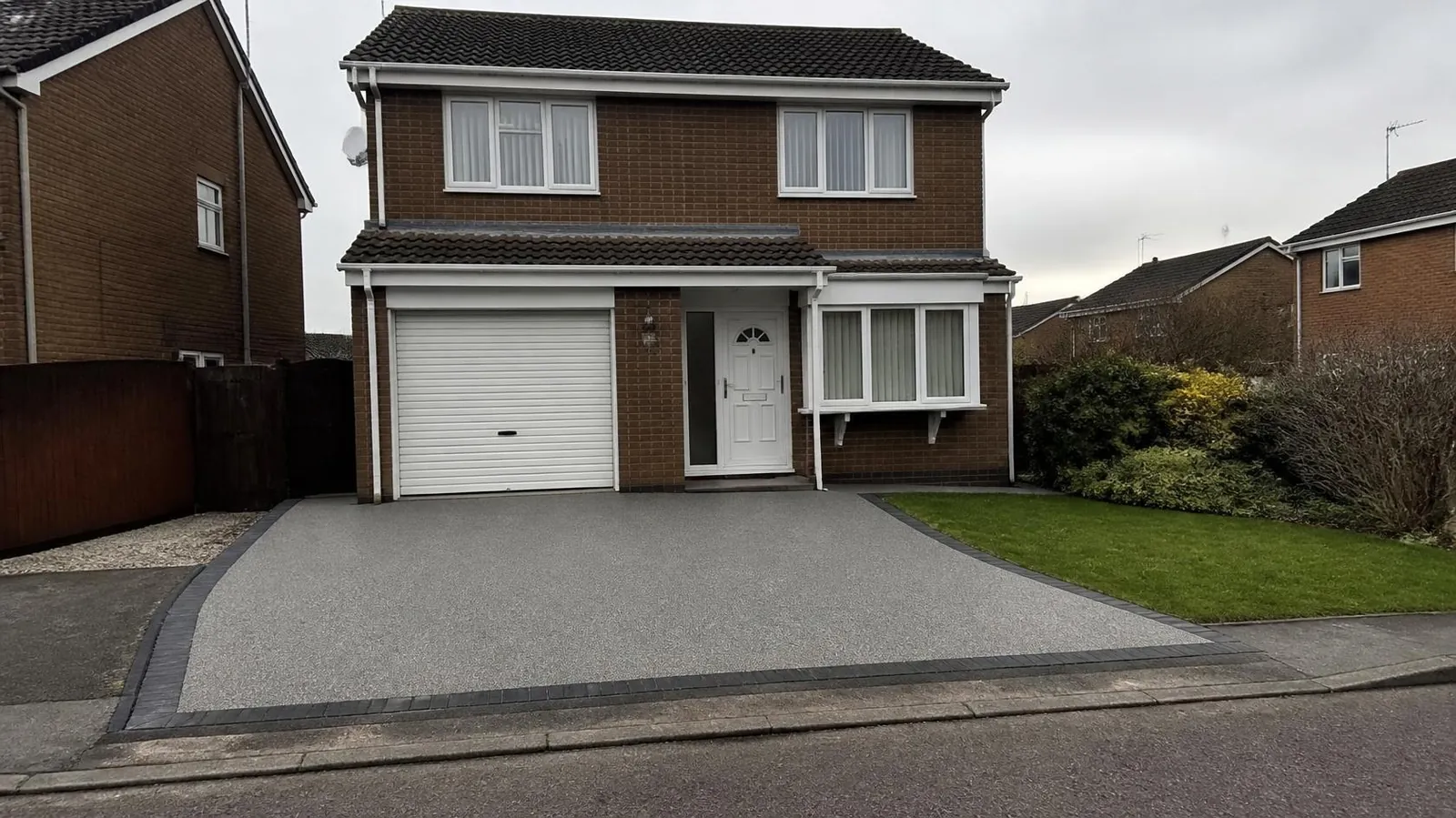
| Grey, stony tarmac that is still level | Worn surface; often suits resurfacing |
| Dips and ruts across most of the drive | Failed or thin sub-base; rebuild likely |
| Cracks that come back after filling | Movement underneath; rebuild likely |
On Stockton's slow-draining clay, soft spots often start where water collects. Fixing the surface without dealing with the water usually means the same patch sinks again.
Re-laying sunken block paving
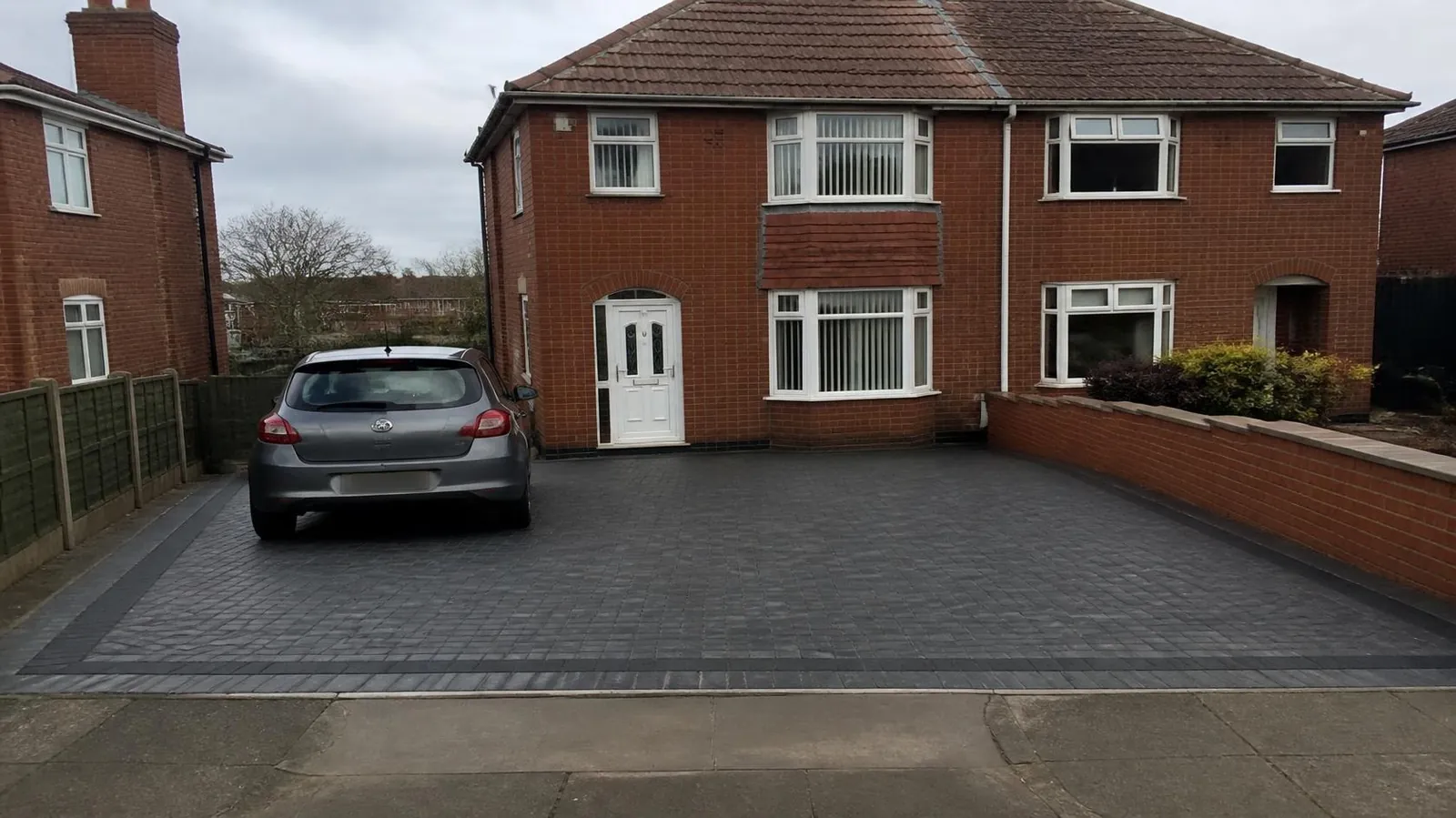
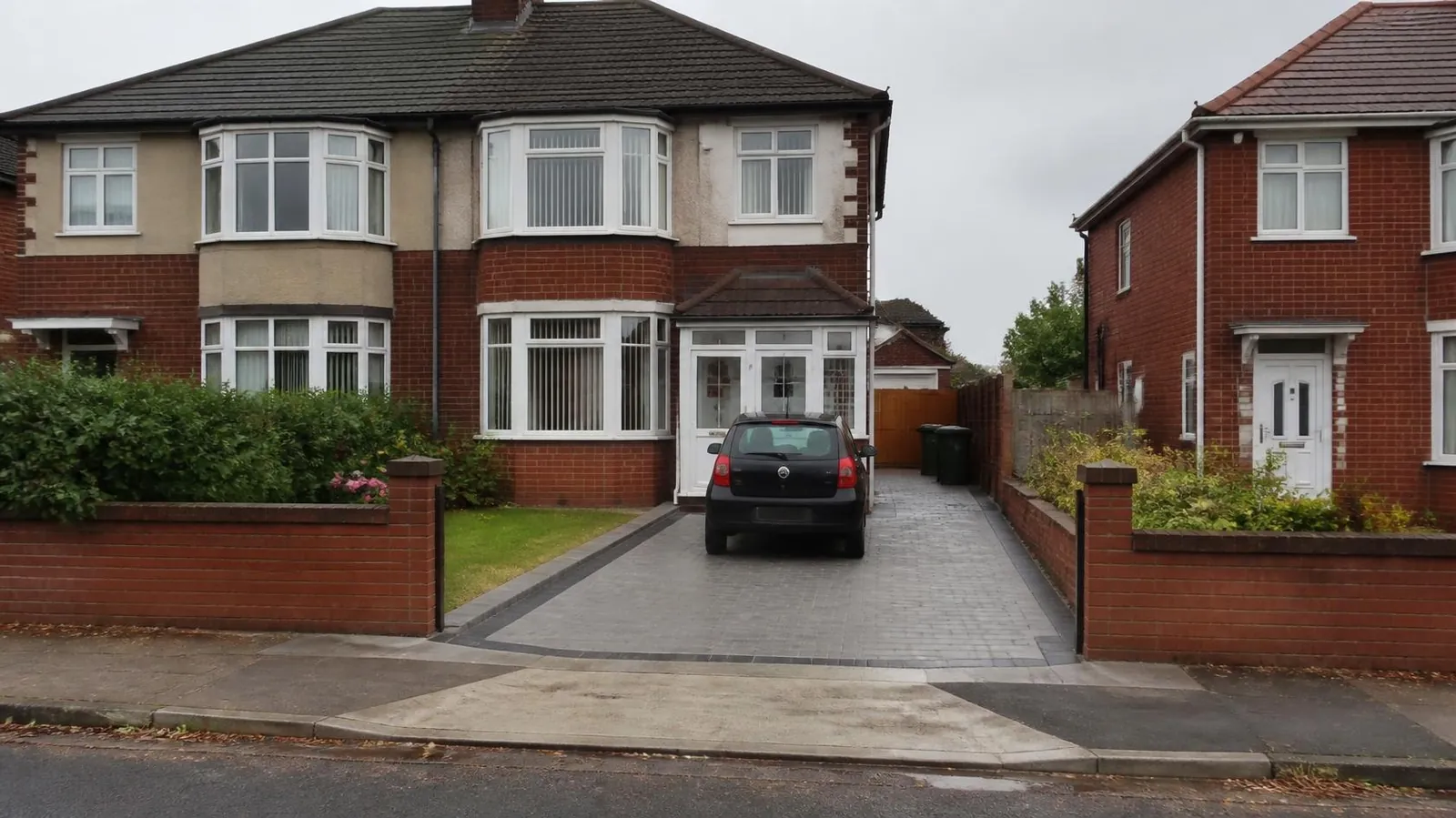
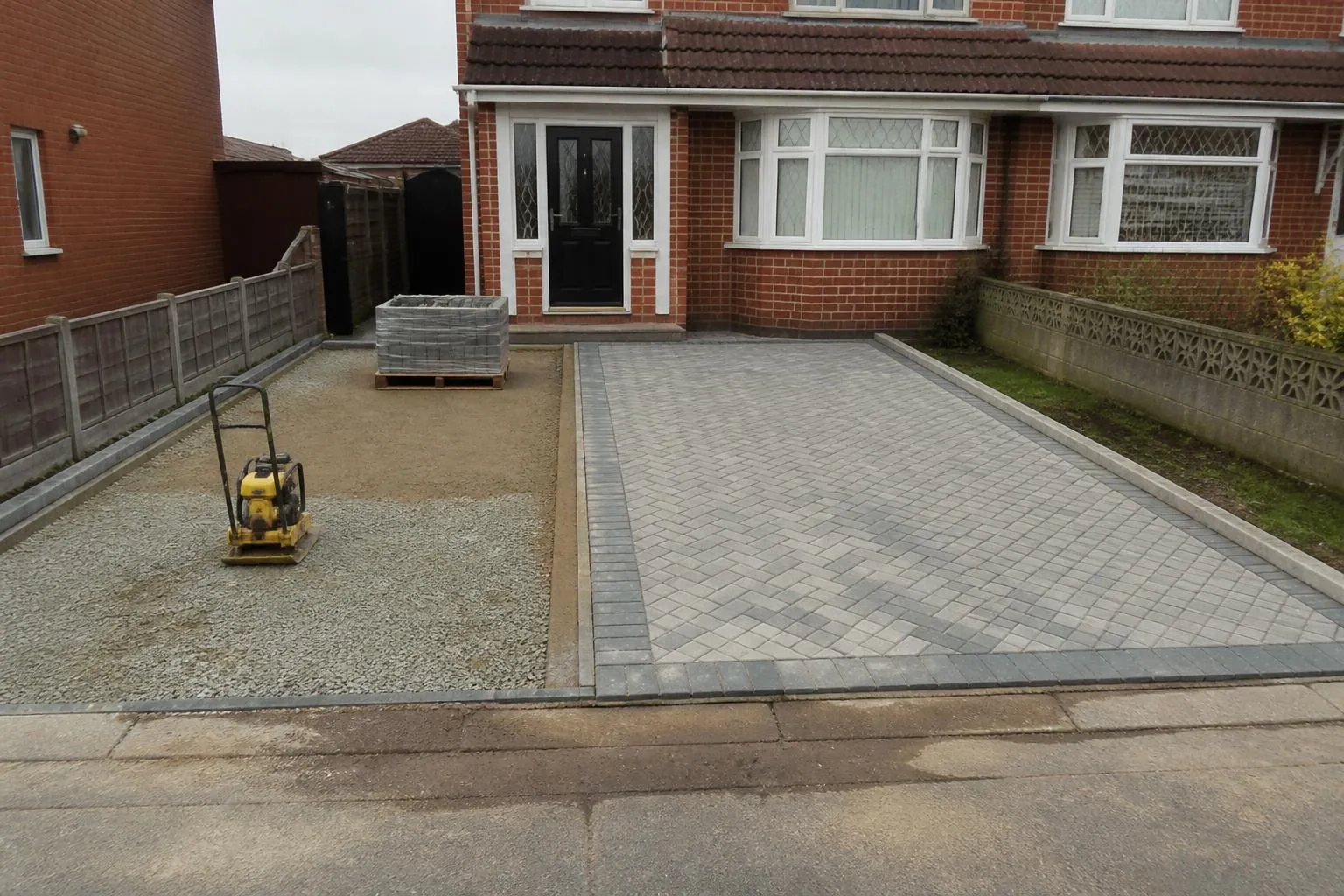
Block paving is the most repairable surface. The installer lifts the blocks in the sunken area, finds out why it sank, rebuilds and compacts the base, relays the sand bed to the right level and fall, puts the same blocks back and compacts and re-sands the joints. Builder-laid drives on newer estates, including parts of Hardwick and Bishopsgarth, often need exactly this in the wheel tracks or around inspection covers. See block paving.
If the edge blocks have no concrete haunching behind them, the paving can creep outwards. Re-setting the edge course is often part of a good repair.
Patching and resurfacing tarmac
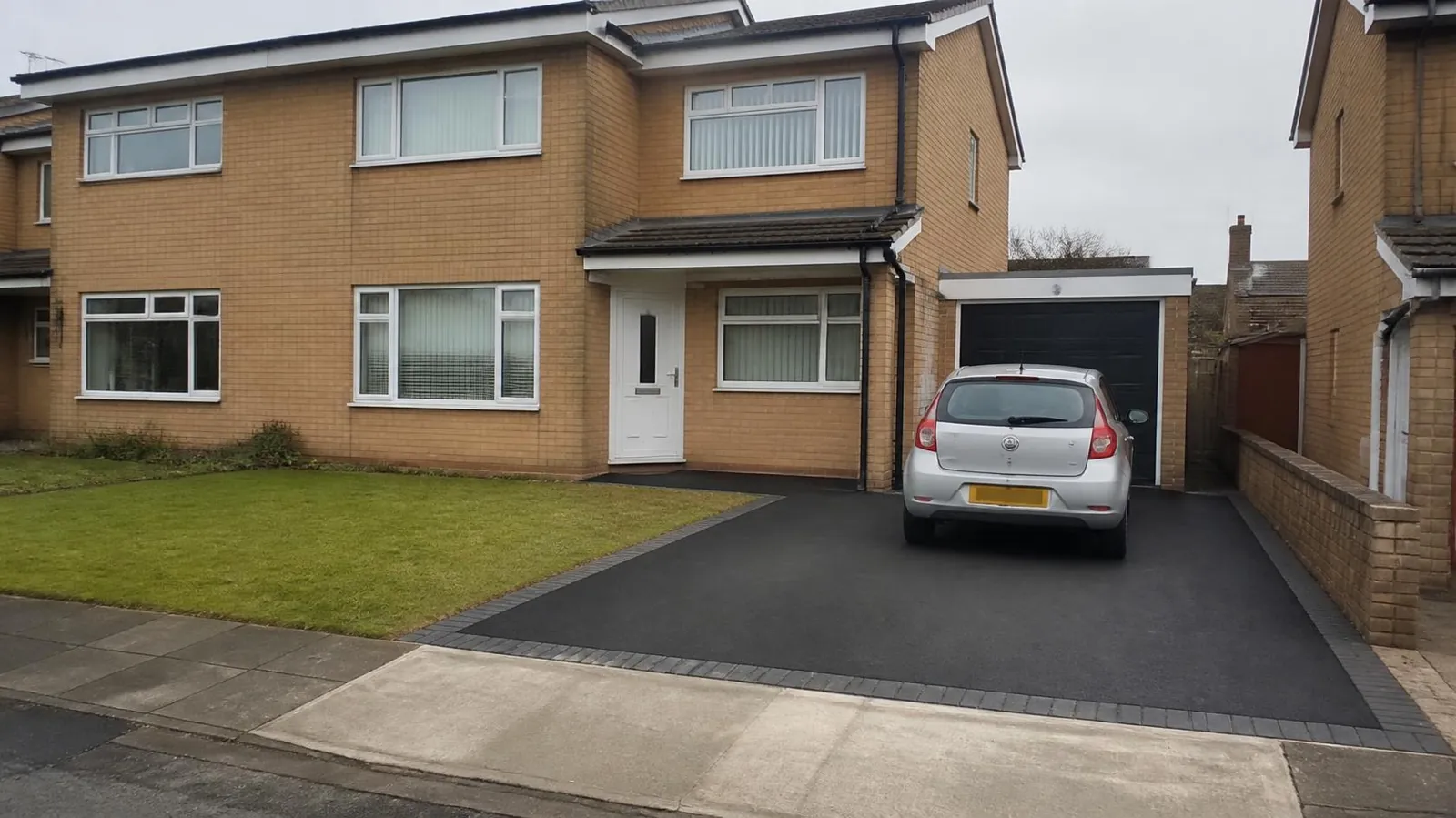
Potholes should be cut back to a square edge, cleaned, tack-coated and filled with hot material, then rolled and sealed. A drive that is worn but still level can take a new surface course over the old one, as long as the finished level stays at least 150mm below the damp-proof course and does not block air bricks or catch the garage door. See tarmac driveways.
Tarmac is the surface most often offered door to door with "leftover" material. A genuine repair starts with someone measuring up and putting the work in writing.
Gravel, resin and concrete
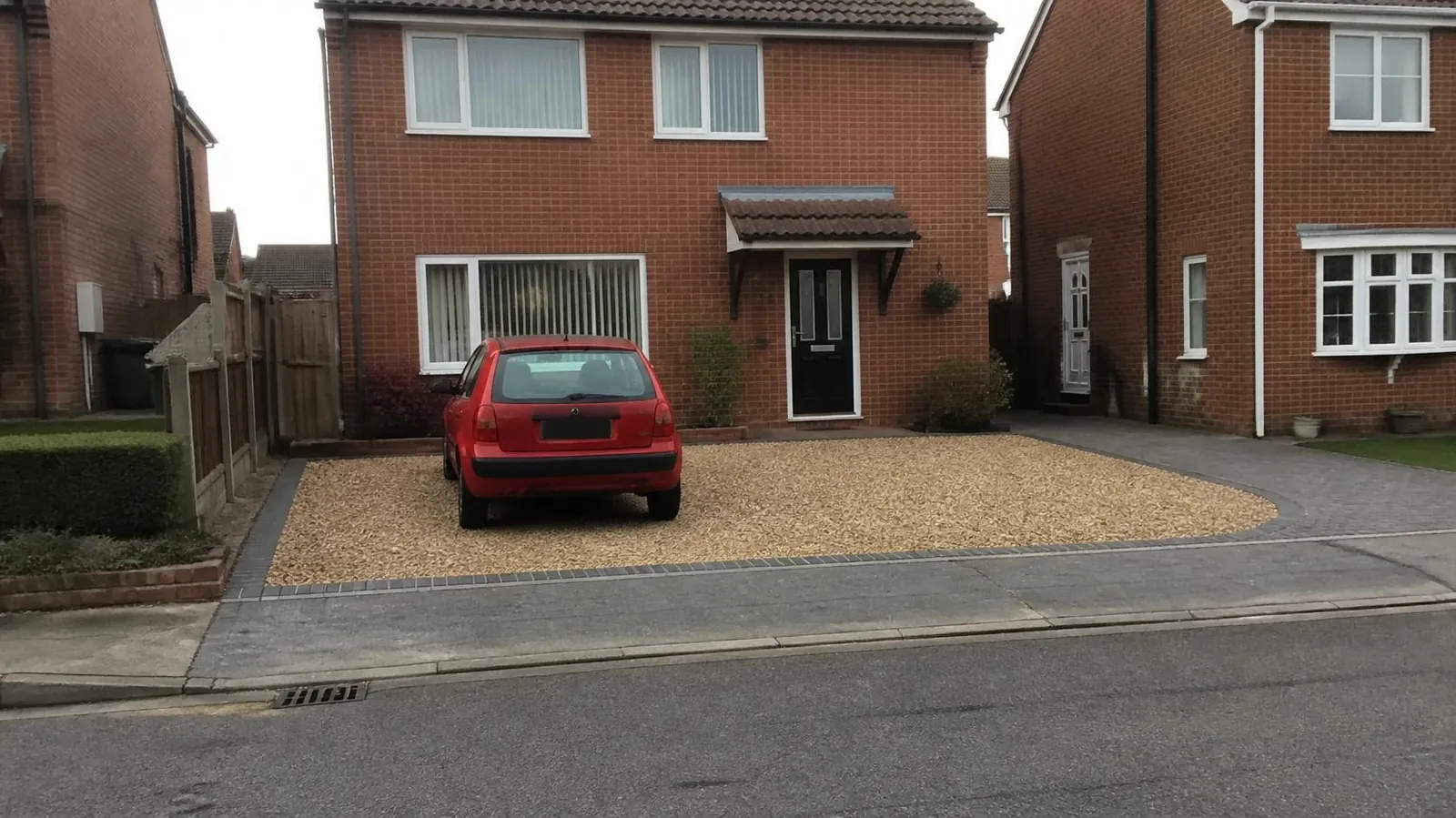
- Gravel: rake out ruts, top up with matching stone and, if it keeps moving, lay a stabilising grid. See gravel driveways.
- Resin: small areas can be cut out and relaid, but colour matching is hard and cracks usually come up from the base. See resin driveways.
- Concrete: fine cracks can be sealed; sunken or rocking sections generally need breaking out.
Planning, the kerb and conservation areas
Patch repairs are not a planning matter. Replacing or resurfacing a whole front drive follows the same rule as a new one: more than 5m² of impermeable surface draining onto the road needs planning permission. Our permeable driveways guide explains the options. In conservation areas with an Article 4 Direction, such as parts of Norton, changing the front surface can need permission, so check first: see conservation areas and driveways.
A broken dropped kerb or pavement belongs to the highway, not to you. Report it to Stockton-on-Tees Borough Council rather than paying privately. See dropped kerbs.
Common questions
Can sunken blocks be relaid using the same blocks?
Usually, yes. They are lifted, the base is rebuilt and compacted, and the same blocks go back down.
Will a repair match the rest of the drive?
Relaid blocks match because they are the same blocks. New tarmac, resin or replacement blocks will look fresher until they weather in.
Is resurfacing cheaper than a new drive?
Usually, because the base stays in place. It only lasts if that base is sound.
Who fixes a cracked kerb at the end of my drive?
The council, as highway authority. Report it to Stockton-on-Tees Borough Council.